Korg MICROKorgS Review UK 2026
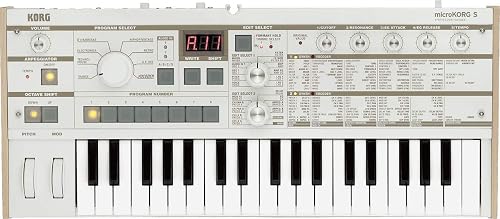
Quick verdict
Score: 6.5/10
Best for: Hands-on sound design and making basslines, leads and pads, standalone
Not for: Anyone wanting a workstation, a stage piano, or a software-only setup
Bottom line: A characterful synthesizer (analog, 37-key keyboard) for hands-on synthesis.
Overall, the Korg MICROKorgS is a compact analog synthesizer with a 37-key keyboard and a vocoder, making it suited to both melodic playing and voice-style processing. The emphasis is on versatility, since the vocoder can support speaking or singing tones while the 37 keys support quick composition of synth parts. Buyers in the UK who want one unit for basic synth lines plus vocal processing may find it a good fit. More hands-on control may be limited compared with larger units.
Key specifications
| Aspect | What it provides Notes |
|---|---|
| Keyboard | 37-key Not specified action type |
| Synth style | Analogue modelling Type details not specified |
| Vocoder | Voice-style processing Parameters not specified |
Pros
- Analog synthesis
- Hands-on, standalone sound design - no computer needed
Cons
- A learning curve to master deeper sound design
- Focused synth, not a do-it-all workstation
- It's a synth for sound design, not a stage piano or arranger
Sound and Synthesis
With an analogue modelling approach, this synthesizer uses a 37-key keyboard as its main control surface. The vocoder is designed for voice-like processing, adding a robotic or harmonised texture. The synth section centres on tonal building, starting from basic waveforms and then shaping sound through filters and modulation. The instrument also supports blending steady analog-style tones with vocoder effects, where a vocal sample or mic input can drive pitch and formant changes. The key strength is the clear separation between normal synthesis and voice processing. Limitations are not fully specified, and the exact synthesis methods are not detailed.
Playability and Controls
Playability on the Korg is centred on its 37-key keyboard, which offers direct finger access to melodic lines, held chords and sound changes. The control layout is designed for live use, with sound parameters adjustable during performance without relying on deep menu navigation. The compact key count suits short runs and two-handed chord shapes, while it restricts extended-range playing. Because the unit is vocoder-equipped, timing affects pitch capture, so changing settings mid-phrase can be disruptive. Overall, the panel supports quick experimentation, but some players may need time to develop consistent parameter movement.
Connectivity and Sequencing
Connectivity and sequencing on the synthesizer focuses on how it can sit within an existing setup, with particular attention on live routing and straightforward pattern building. Its key control is designed for fast note entry. For live routing, the MICROKorgS can be used as a simple controller source within an existing audio chain, assuming the relevant inputs are available, although specific connection types are not detailed. In sequencing practice, parts are typically built by repeating short played passages and then adjusting them while listening, with the exact connection approach left unspecified.
Form Factor and Build
The MICROKorgS has a compact form factor centred on a 37-key keyboard layout, which makes it easier to fit into a desk space or a smaller live setup than full-size keyboards. The smaller key count supports quick practice sessions, while the enclosure is designed for everyday handling, keeping the controls within reach when seated or standing. Its compact size also places less space around the front panel, so hands-on adjustments can be more constrained when other gear sits nearby.
Who Is This Synthesizer For?
For musicians who want a compact analog modelling synthesizer with a small footprint, the Korg is a practical option, with a 37-key keyboard and a built-in vocoder. It suits players who prefer direct, hands-on note input, since the smaller keybed still supports basic melodies and chords. Producers looking for an integrated voice-processing feature may find the built-in vocoder useful for adding voice effects without additional outboard gear. Limited options are more likely for anyone specifically needing a full-size keyboard feel or broader hands-on synthesis control.
Where to Buy in the UK
In the UK, the synthesizer MICROKorgS (a 37-key analogue modelling synthesizer with vocoder, white) is available via major music retailers and online marketplaces, with availability varying by colour and stock level. Buyers can check in-store listings first so staff can confirm the exact item number, and the keyboard action can be inspected. For online orders, shoppers should compare condition (new or used) and confirm the listing is for the white unit, since variants exist. Synth-focused shops can also help with setup, though stock can be limited.
Frequently Asked Questions
Is the Korg MICROKorgS worth it?
For making your own sounds, basslines and leads with analog synthesis, the Korg gives hands-on, standalone sound design without a computer. Whether it suits you depends on the sound and features you want. Check the current Amazon UK price, as synths are often discounted.
Is the synthesizer analog or digital?
The Korg is analog. Analog synths generate sound from circuits for warm, characterful tones and hands-on tweaking; it's prized for that classic, living character.
What form does the synthesizer take - keyboard or desktop?
This synthesizer is a 37-key keyboard, so you play it directly from its own keys. That's the most immediate, playable format, ideal if it's your main or only synth.
Do you need a computer to use the Korg?
No - the Korg MICROKorgS is a standalone hardware synth, so you make sounds and (where it has a sequencer) play patterns without a computer. You can connect it to a DAW via MIDI or USB to record or sequence, but it works entirely on its own.
Is the synthesizer good for beginners?
Hands-on hardware synths are a great way to learn sound design - you tweak a knob and hear the change instantly, which teaches you faster than software. There's depth to grow into, but you can make sounds within minutes. Simpler, more affordable synths are the friendliest place to start.